What Does the Pew Research Center Say About Children and Teens Taking After Their Parents Religiously?

Alison Faison • September 26, 2022

 We as parents or adults working with children and teens know that our actions stick in the minds of our children more than our words. If we create time to be with our children and teens, they notice. How does this act of being present figure into the Pew Research Center’s survey data about teens and their approach to religion and spirituality?


We learned from the March 29 – April 13, 2019 survey, that most teens (ages 13 to 17) shared the religious affiliation of their parents or legal guardians. Interestingly enough, 80% of children and teens identified with their parents’ Evangelical Protestant practice. Only 6% of Mainline Protestant children and teens identified with their parents’ practice. Those percentages reflect that parents of evangelical church congregations might put more pressure on kids to attend worship and fellowship events. It could also be the noted decline of family participation in Mainline Protestant congregations. “On the whole, U.S. teens attend religious services about as often as their parents do: 44% of U.S. teens say they go to religious services at least once a month, almost exactly the same as the share of their parents who say they attend monthly (43%).


When we look at the data offered by teens, we wonder how their faith-formation as a child affected the outcome. Did the family begin attending church when the child was young, and so the tradition or habit formed a grounded practice over time? Did they start attending with family when the child became a teen, as there were more social and spiritual events geared for teens? Other Pew Research cited that a strong factor in young adults returning to church was the presence of influential adults who connected with them during their formative years at church.


How does the pandemic factor into how families are attending church? Pew did another study in March 22, 2022 More houses of worship are returning to normal operations, but in-person attendance is unchanged since fall. Even with houses of worship open for in-person services and fellowship events, people are still connecting online. Last fall 2021, the online streaming declined and about one-third of the surveyed U.S. adults said that “they typically go to religious services once or twice a month.” Roughly one-in-five U.S. adult regular attenders reported that they had neither attended in person nor watched virtually in the last month.”


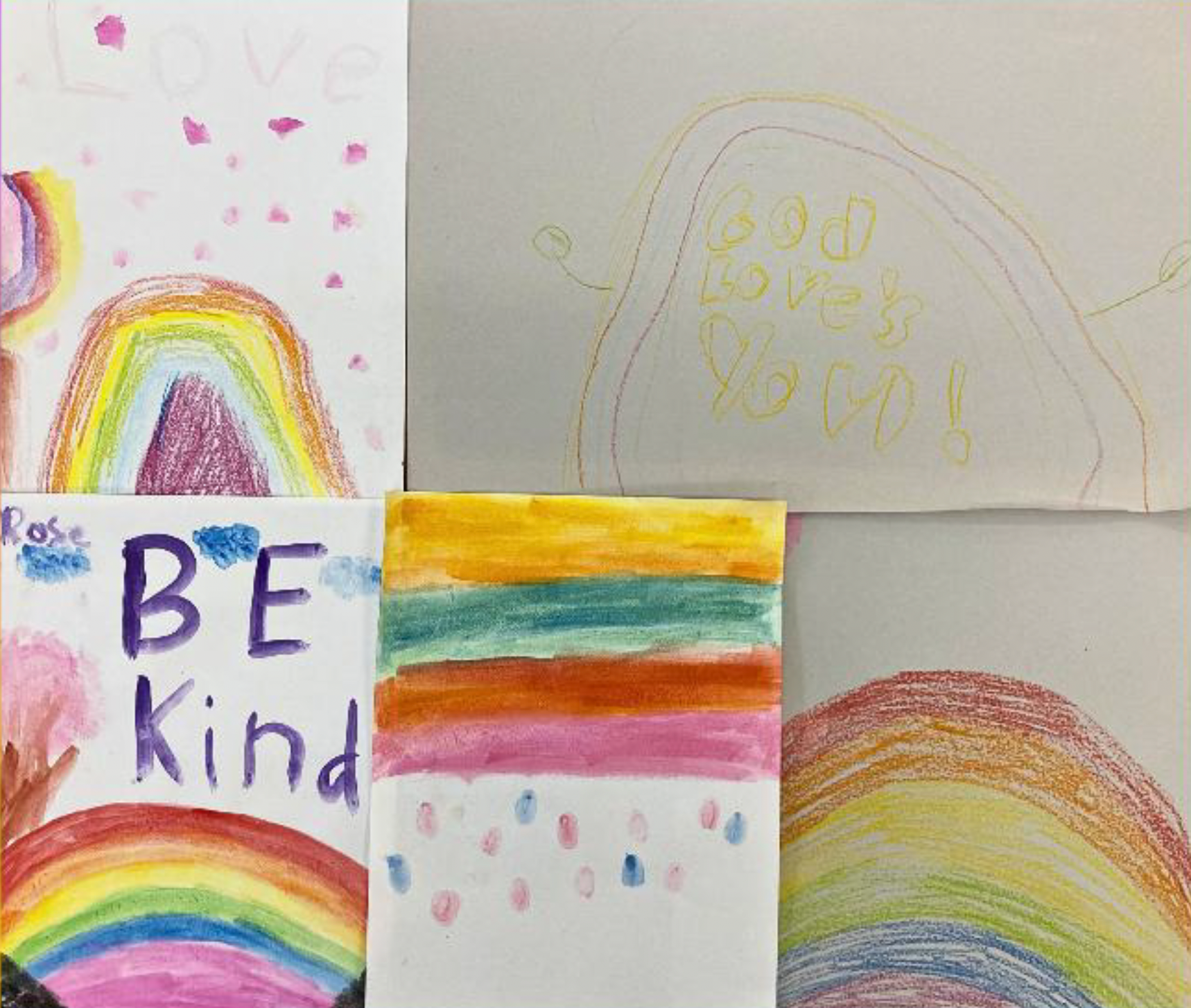
On September 11, Calvary Homecoming, 19 children and 20 youth attended the service. That tripled the in-person children/youth attendance Calvary consistently had throughout 2021 and part of 2022. For three weeks, we have been seeing this rise in participation. We hope that community grows and inspires families, children, and teens to see their friends at church. As last Sunday’s sermon title said, “You can’t lead alone.” Moses needed Aaron to face Pharaoh, so that they could loosen the bonds of slavery and move toward a new life with the Hebrew People.
A palm leaf with text that says ‘enough is enough’
By Rev. Marci Glass March 29, 2026
What we get before Palm Sunday in John’s gospel is the story of people who are ALL IN, saying enough is enough if a culture of violence wants to keep people in their graves. Enough is enough if generosity and abundance are scorned. Enough is enough if talking about new life is threatening to people in power . They lead
Ecco Homo by Caravaggio, c 1605. Jesus on trial
By Rev. Marci Glass March 22, 2026
In this passage from John's gospel, we're reminded that while the occupying Roman government murdered Jesus, they did so with the encouragement of Jesus' own people. What does this story have to say for how we live together, how we acknowledge our mistakes, and how we are called to be faithful today?
A road sign that reads ‘good choice, bad choice’
By Rev. Joann Lee March 15, 2026
After Pilate examines Jesus, he finds no fault in him. And yet, he offers the crowd a choice any way: release Jesus or Barabbas? The crowd chooses Barabbas, a convicted criminal over Jesus. How do we continue to choose Barabbas over Jesus still today?
A big starry night sky with the sun setting and the Milky Way galaxy. The text reads “I AM (not)
By Rev. Marci Glass March 8, 2026
In today's reading, Peter denies Jesus three times. Peter isn’t any worse than any other sheep in God’s flock. Here, at least, he’s also not better. We are people, like Peter, who deny. We deny our connectedness. We divide into “us and them”. We seek easy answers to complicated questions.
Cover photo of the annual report
By Rachel Wolf March 3, 2026
A coupon that reads ‘bread bath and beyond 100% free grace, never expire!’
By Rev. Victor Floyd March 1, 2026
On the night we expect bread and cup, John’s gospel gives us a towel and a basin. Jesus kneels, turning ritual into relationship and power into vulnerable love. Communion is not words at a table, but embodied connection that changes and binds us together—when we dare to be present.
An opening tomb with a rock moving out of the way to light - the text reads 'living, dying, rising
By Rev. Marci Glass February 22, 2026
The rhythm of living, dying, and rising is the story of our faith, and the rhythm of our lives. We worship a man who rose from the dead. After he had lived. And after he died. As we enter the season of Lent, we'll focus on the story of Lazarus, and see how living, dying, and rising affected him and his community.
A lens inside a pair of glasses looking into a field of flowers - text reads ‘blinded by the light’
By Rev. Marci Glass February 15, 2026
In John's Gospel, the signs Jesus performs are supposed to point people to see who Jesus is, to connect them to God. But in the sign of the blind man receiving his sight, it doesn't seem to work. When Jesus' signs don't match what we know to be true in the world, do we dismiss them, explain them away?
A native indigenous colorful dance dressed in feathers and ritual garb. Fest Parade by Neil David Sr
By Guest Preacher Mark Yaconelli February 8, 2026
Many of us feel things are falling apart-either in our personal, professional, or public life. How can suffering invite us toward deeper freedom, integrity, and trust in God? How can our helplessness transform us into the people God has created us to be?
Jesus & the Samaritan Woman by James He Qi • heqiart.com
By Rev. Marci Glass February 1, 2026
We live in a world full of shallow wells, creating a thirsty, isolated world. There’s a lot of anxiety in the world, in the church, because we turn to those shallow wells and are never satisfied. Jesus offers the Woman at the Well living water. What would it take for us to leave our water jars by our wells so we can ha
More Posts